

Leadership Focus: Moving from manager to leader
3 executives share how to transition from managing tasks to leading people
By Robbie Caploe, director of strategic initiatives, Ragan Communications
Leadership and management are often used as interchangeable terms, but they serve distinct purposes.
Leadership inspires vision, drives change and motivates people. Management focuses on structure, processes, and efficiency. Both are essential yet fundamentally different.
Understanding how they diverge—and complement each other—is key to building successful teams and navigating organizational challenges.
We spoke to three executives to hear how they traverse the manager/leader divide to benefit themselves, their colleagues and their teams.
- DeeDee Kramer is an executive coach and has held senior roles at Chubb Group, ABC and two management consulting firms.
- John Pagano is vice president of editorial at Nickelodeon Digital Studios.
- Dan Aks is a special advisor to Perion, former president of Undertone, and former president and CEO, Antenna.
With an uncertain economy and turbulent markets, it’s more critical than ever for communicators to understand how all the pieces snap into place. Here’s what they had to say.
Have you seen colleagues or clients who are elevated from management to leadership positions and have trouble making the transition?
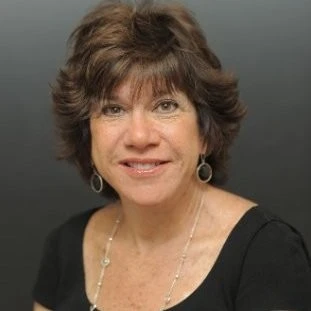
DeeDee Kramer: For some managers, the reason they were promoted into a senior job is that they get things done. And they think now they have to play the role of the police, so nothing goes wrong.
And that’s fine, but what leaders should be doing is to take a look at their relationships with others within the organization and build strong, trusting partnerships.
John Pagano: Leadership is also about empowering other people. Let's say you're an employee coming in with a certain level of skill. My responsibility is to make sure that I’m uplifting you and others around you so that you can do the job the best way possible.
Or looking at another way, I need to provide you with a space to think differently so you can affect the future of what our corporation is or department is. And now especially, it's about being a champion of change.
Can you give us an illustration?
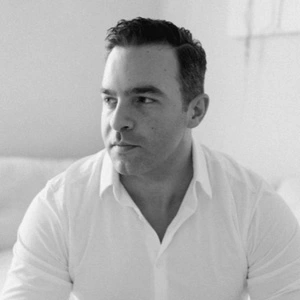
Pagano: There's a big push on YouTube right now with vertical videos, going up against Tiktok and Reels. But we didn’t know that much about verticals. So we set up what we call a "Shorts-athon" and gamified it.
When you gamify things, you give people agency but you also give them the room to play and swing big with little or no consequences. We gave people eight hours to create different ideas for weird, funky, platform-breaking ideas. They were the manager and the CEO of their product.
This gave them room to play and us food for thought. We got some great content out of it that actually was actionable at the end, becoming successful formats that we duplicated again and again. That’s an example of [a leader] providing people with room to grow and room to breathe.
What are other ways that good leaders educate themselves?
Kramer: A leader must continue to develop a strategic perspective.
A lot of times when I coach somebody, leaders get the feedback that they're just not strategic enough for their new level. And so the executive will say to me, “I heard my boss. I know that I have to be more strategic so I'm going to take a half hour every morning to thinking about strategy.”
When they say that I laugh, because that's not the way you become more strategic. The way you become more strategic is by getting out and bringing the outside in, going to conferences, meeting with peers and other companies to get benchmark information so you understand what's going on in your industry.
It's about being able to connect the dots to see the future. And a lot of times people in different organizations live in their own bubbles.
Pagano: A leader almost has to be the ghost of Christmas Future. You have to be in the present state and the future state at all times. That means I'm paying attention to what the trends are in my industry and technology in the market, and I'm pushing this toward actionable future-proofing change that's positive for everybody. In my case, that resulted in the adoption of AI tools.
What are other instances of good leadership vs. management?
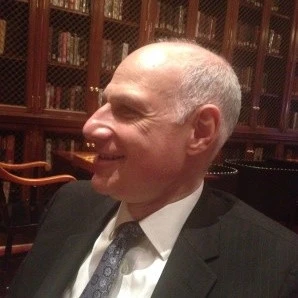
Dan Aks: A good leader inspires people with a broad destiny so that others want to follow, and that leader is then able to get senior staff to perform the necessary tasks to take people along that journey. Leaders appeal to a higher cause. They’re driven by that cause.
Can you give us an example?
Aks: Bill Gates in his day at Microsoft. The programmers loved him. He had a vision – democratization of computing power. People slept under their desks when they were building Microsoft because they were enamored with Bill and his vision. They felt understood by him. He was a fabulous leader. They felt they were part of a movement and that their work mattered.
How should leaders treat their managers?
Kramer: One of the key things you look for in leaders is humility. C.S. Lewis said it, but I've stolen it as my own: “Humility is not thinking any less of yourself; it's thinking of yourself less.”
That’s also the difference between somebody on their way up and somebody who’s gotten there. Somebody on their way up will sit in a senior leadership meeting and say, “This is what we worked on,” and they will present. A very senior person who’s already arrived will say to one of their people: “Hazel, you got this. Why don't you make the presentation?” It’s about letting other people shine.
Aks: The best thing leaders can do is make more leaders, or you cannot sustain what you’re doing. They also inspire confidence by being calm. They reduce people’s fear and anxieties which brings out the people’s best and they think, “I can grow.”
This has to be done on a regular basis, doesn’t it?
Kramer: Yes. I was working with one of the big financial firms and they wanted the leaders to do more coaching.
I asked the group to tell me how many people they coach and when, and the answers I was getting were, “I coach my staff after I finish all my work. If I have time then, I'll coach.”
I said, “Wait a second - what do you mean, “when you finish your work?” If you're in a leadership role, coaching and developing your team is your work.”
What should a good leader do at this point in time?
Aks: Offer a vision for the future. Offer an answer so people want to be a part of what you’re doing. Great leaders have a vision and it starts with caring about the customer. Second is to care about the institution, to set it up so it’s good and will last. Your third priority? Yourself.