

Member Exclusive: Hits and missed opportunities from quarterly earnings reports
Corporate earnings season is more than a peek into economic health. It's an exercise in storytelling
By Mike Prokopeak, director of learning and Council content
Corporate earnings releases aren't the sexiest of communications tasks but they're important. This year, they take on added significance as investors scrutizine reports to parse out the effect of the Trump Administration's policies on trade and the economy.
The latest reports paint a two-speed picture of the economy: Business spending on artificial intelligence and infrastructure is booming, while consumers are splurging selectively on beauty and toys, but not necessarily on groceries or pet food.
But it's not just about the numbers. For communicators, earnings statements are an interesting narrative exercise, sharing good and bad results while also seeking to shape investor perception. And some companies are adding to their toolkit to get the word out.
The typical corporate release
Some companies take the straight route and issue a press release and schedule an earnings call with investors. Take Texas-based computer-maker Dell Technologies as a case in point (release below).
Dell issued a release headlined with record revenue, up 19% year-on-year, thanks in large part to a surge in demand for AI servers. The company raised its full-year outlook but paired that with a conservative forecast for the current quarter, with quotes from the company's CFO and COO to add details.
On the consumer side, Ulta Beauty and LEGO delivered evidence of resilient consumers who are paring back on essentials but still willing to treat themselves. Ulta’s release (attached below) spotlighted how sales jumped 9.3%, with comparable sales up 6.7%. Management celebrated margin gains from lower theft but added a cautionary note about demand in the second half.
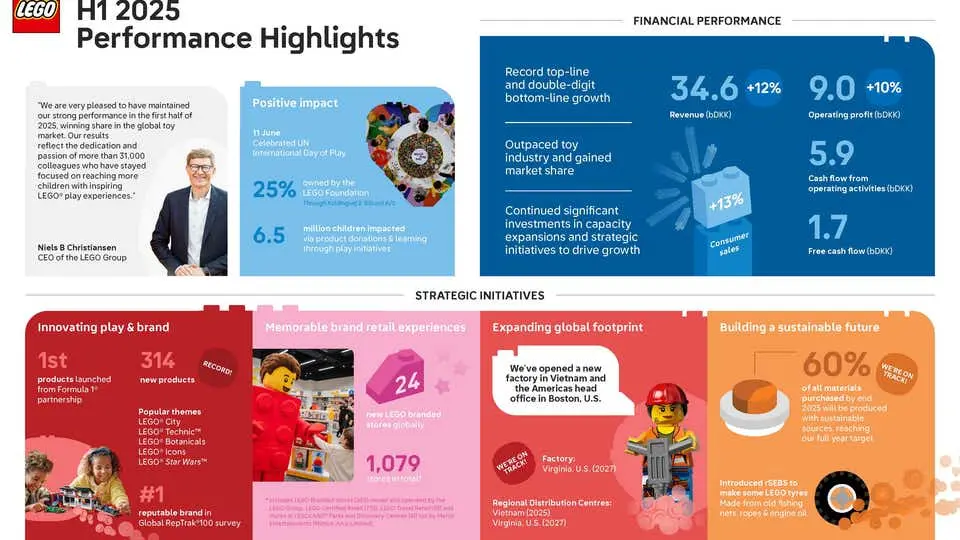
LEGO, meanwhile, posted double-digit top- and bottom-line growth, attributing strength to product innovation and global expansion. Its release emphasized sustainability efforts and store openings, framing the numbers as validation of brand and mission. They jazzed up the release with bold brand colors and downloadable graphics.
Mixing the good with the bad
Other retailers had a harder story to tell. Petco saw revenue dip 2.3% with comparable sales down 1.4%, but they spotlighted profit growth and raised the outlook on the back of cost controls. The rhetorical order was deliberate: achievements first, headwinds second.
In packaged foods, J.M. Smucker revealed the toll of volatile commodity prices and trade policy. Higher coffee costs and tariffs squeezed profit, prompting a miss on the bottom line. Yet the company nudged up its sales outlook, a communications strategy designed to soften disappointment and reinforce confidence in the full-year path.
Financial services offered their own version of repair and recalibration. TD Bank swung back to a $3.3 billion profit from a loss last year, with adjusted earnings up 6%. Its release, heavy with “items of note,” spotlighted restructuring and compliance costs alongside operating strength, a reminder that the cleanup from regulatory missteps remains a drag even as the core stays solid.
Adding video to the earnings toolkit
Thus far, it's all been pretty standard investor relations stuff. But the standard stuff may be leaving unrealized value on the drawing room floor.
Take a look on LinkedIn for how some companies have chosen to present their results. Using their personal pages, CEOs add additional commentary and color to the result. LEGO Group CEO Niels Christiansen added a personal note and slideshow to his post.
Tech firm Elastic's CEO Ashutosh Kulkarni summed up Q1 FY26 earnings with an informal video seated around the conference room table, and put the company's AI-fueled growth in context.

Gap Inc CEO Richard Dickson took home the prize this quarter, though, with this 4-plus minute video where he walks through quarterly results while actually walking through the company's flagship Banana Republic store in San Francisco, decked out head to toe in the company's apparel of course.
What it all means
Taken together, quarterly earnings underscore a split economy: corporations and consumers alike are choosing where to spend carefully. AI infrastructure and small luxuries are winning. Everyday categories, food, and pets, less so.
And just as the results themselves diverge, so too do the ways companies frame them, whether that's with celebratory headlines, caution flags, carefully sequenced narratives or a video of the CEO.
Investor relations may be aimed at keeping investors informed, but that doesn't mean it has to end there. Earnings statements, and the associated communications, are an opportunity to shape the narrative of your brand for customers, investors and partners alike.
Have a story to share about how you've shared quarterly earnings with internal or external audiences? Drop me a line at [email protected].