
Exclusive: Internal comms writing tips from Ragan Consulting Group’s Jim Ylisela
During last month’s team training session in partnership with Ragan Consulting Group, RCG co-founder and senior partner Jim Ylisela shared his wisdom on how good writing can transform your organization.
“PR gets all the glory in the external environment, in the media, with brand journalism,” Ylisela, said. “Inside the organization? Not so much.”
He added that this lack of credit makes an added case for internal communicators improving their writing and deploying it as a tool to drive organizational change
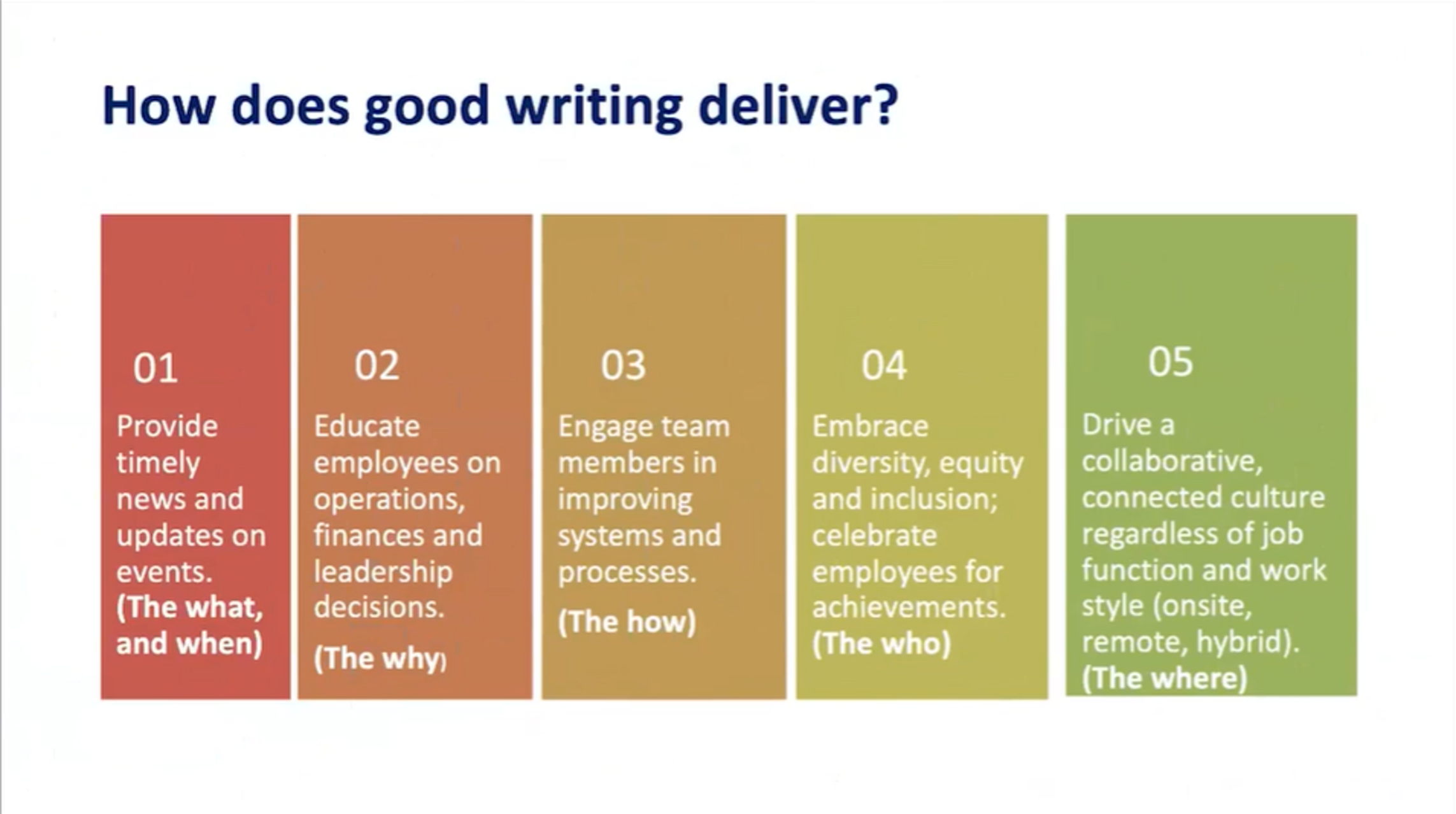
Ylisela went deeper into how good writing delivers value to internal audiences by tethering business functions to news values:

Here are some of Ylisela’s specific tips for stronger internal writing:
- Understand the 80/20 rule. Telling great stories that showcase your organization, the great people stories and analysis are likely only about 20% of what you do. The other 80% is the day-to-day slog of getting information, messaging and content out to people. Ylisela says the ratio might be different, but stresses being pragmatic about how the division plays out. “The 80% is really important,” he said. “We have to focus on making this communication just as good as the stories that write themselves.”
- Think of internal comms as an ongoing conversation. This includes writing about what happened, what’s new and what’s coming simultaneously. If we think about internal comms as ongoing it gives our approach more continuity, said Ylisela, “because it means we follow up on things. It’s staccato -- we move from one thing to the next.”
-
Work on making what’s important interesting. “The communicator’s job is to take all the stuff that’s really important to the organization and somehow make it interesting,” Ylisela said. “That’s our task, and there are a lot of tasks that are not, on their face, interesting.” He explained how internal comms can make a list of stories that keep coming up and desperately need a communicator’s writing touch, including:
- Communication around big meetings
- Strategic plans
- Financial stories
- Benefits stories
He added that finding the emotional center in any communication often means humanizing a story with the face and words of those who are most affected by the information — a best practice of inclusive writing.
- Don’t be afraid to write a story differently. Many boring internal stories suffer from similar problems, said Ylisela: They’re boring, inherently lifeless and convoluted. Worst of all, many internal communicators resist change because of an expectation that something is written “the way we’ve always done it.” To that end, communicators should not be afraid to shake things up and try new formats or approaches to make a boring story resonate.
- Understand if your story is telling the” what,” the “how” or the “why.” The type of writing should be determined based on its intent (recalling an old adage, “form follows function.”) News and information stories convey information and fall into the “what” category, while first-person storytelling falls show “how” and stories from leaders or managers can often effectively convey “why.”
- Be consistent between what you publish and your everyday communications. The same writing techniques that you embrace in your storytelling and company-wide comms should also be flexed in everyday communication with employees and leadership, conveying a consistency in emotion, voice and color of language.
-
Avoid the 3 Ps. Ylisela said that some corporate speak detaches employees from the message you’re trying to convey, specifically focusing on eliminating 3 words from your internal writing to infuse it with more humanity :
- Process – re-contextualize this around someone figuring out a better way
- Program- re-contextualize this around people creating something
- Policy- re-contextualize this as a way for people to reorganize themselves at work
-
Write a compelling lede (first sentence or two). This should read differently depending on the type of story you’re telling. Ylisela broke it down:
- News stories should get to the news values —that’s who, what, when, where, why and how — right in the first sentence. Think about the most important ones to your story and eliminate 2 or 3 that seem less important.
- Feature stories should tell us a good story about a person, place or thing and quickly provide the bigger picture in a paragraph that tells readers where it’s going. Include a “big picture quote.”
Check out Ylisela’s entire presentation, including a recording, slides and a workbook, here