

Member Exclusive: How Siemens Energy reduces the noise with employee personas
By Mike Prokopeak, director of learning and council content
Employees up and down the organization are bombarded with a continuous stream of pings and dings from a range of apps and messaging platforms throughout the course of their workday. That's not to mention the deluge of email that floods into their inboxes.
Communications teams contribute to the problem. According to Ragan's 2024 Communications Benchmark Report, email retains its spot as the most effective channel for internal communications. Seven in 10 communicators say the inbox is where they get the most bang for their communications buck.
But that bang comes with a cost: information overload. "There's still too much noise in the system," said one comms leader who completed the benchmark report survey.
Carla Guest and her team at Siemens Energy are working on a solution to turn down the volume. Guest, senior communications manager at the 96,000-person energy company that operates in 90 countries, developed employee personas to focus and personalize the information they share with employees.
CLC Resource: Employee Persona Template
A persona-based approach to employee engagement
Guest shared their approach during the March CLC Member Call. The idea behind their use of personas, Guest said, is to segment employees and better target messages based on their needs and what motivates them at work. In order to carry out their comms strategy, Siemens Energy determined they needed to meet them where they are.
"Our aim is to group our people in a way that helps us cater for meaningful differences among them," Guest said.
The team developed eight specific personas, with names like the enabler, the creator, the facilitator and the connector (with both office-based and manufacturer versions of the latter).
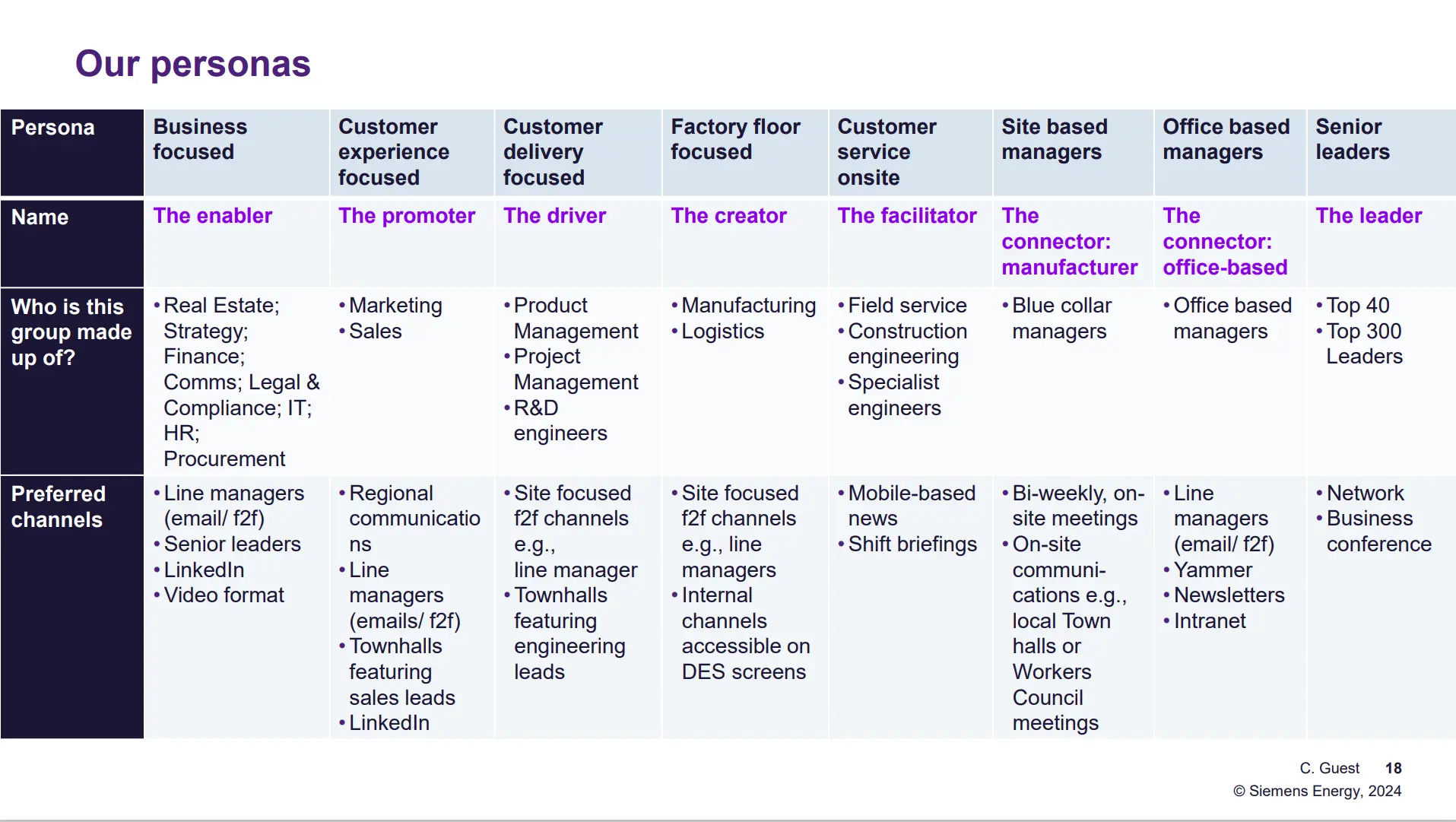
A step-by-step guide to persona development
It's an initiative that other information-overloaded comms organizations should consider. Guest laid out the steps that Siemens Energy's comms team went through to create their personas.
1. Examine employee demographics via surveys and interviews: This process involved exploring what the day-to-day experience is like for different groups of employees based on their region, business unit and function. They also explored the messages they currently receive.
2. Identify personas and segment employees: The comms team conducted 54 hours of interviews with employees across multiple demographics and working situations, from office-based workers to frontline manufacturing employees, and across countries, regions and age groups. They asked questions about their role, location, division and type of job, and probed into their information consumption patterns.
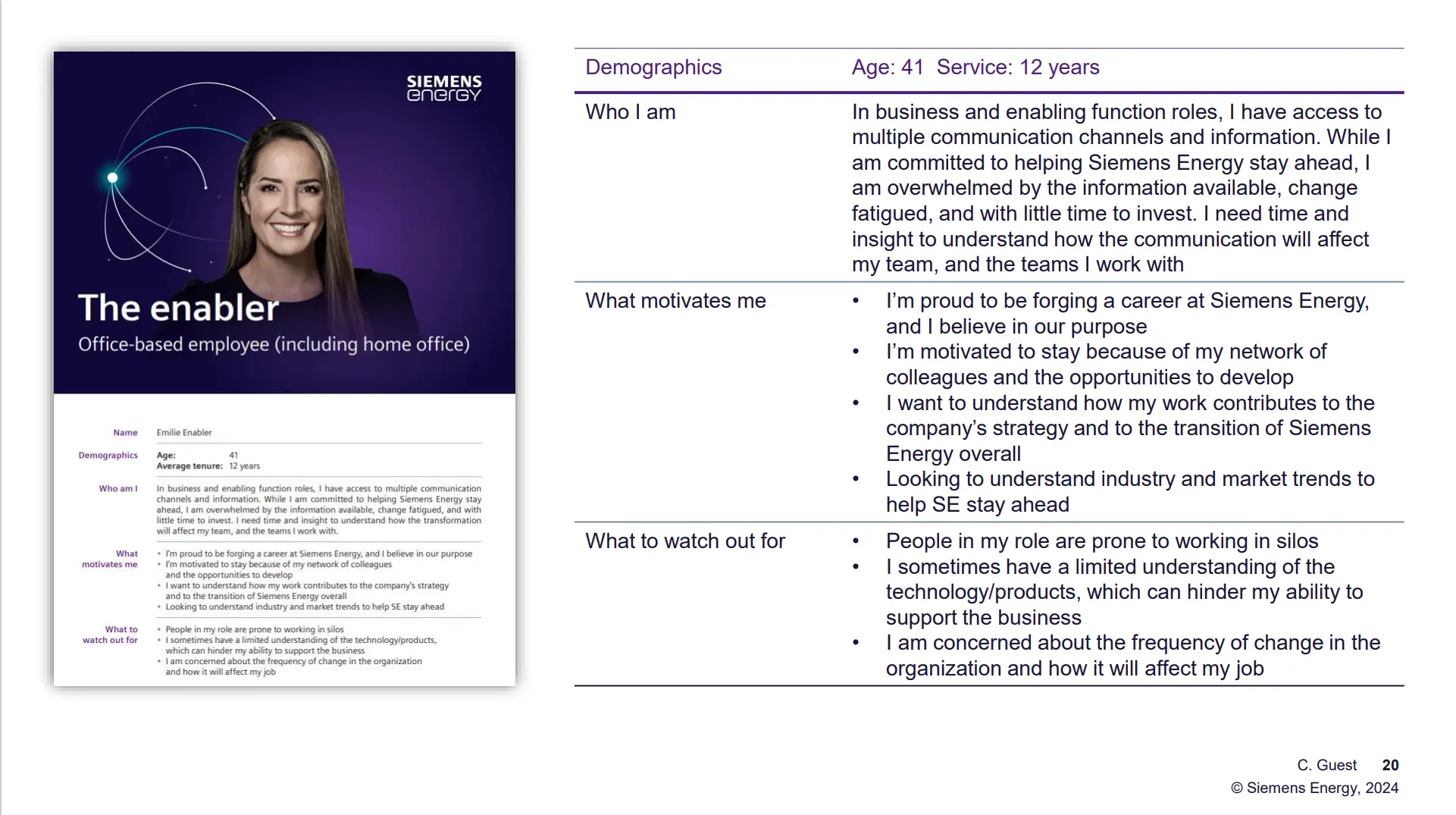
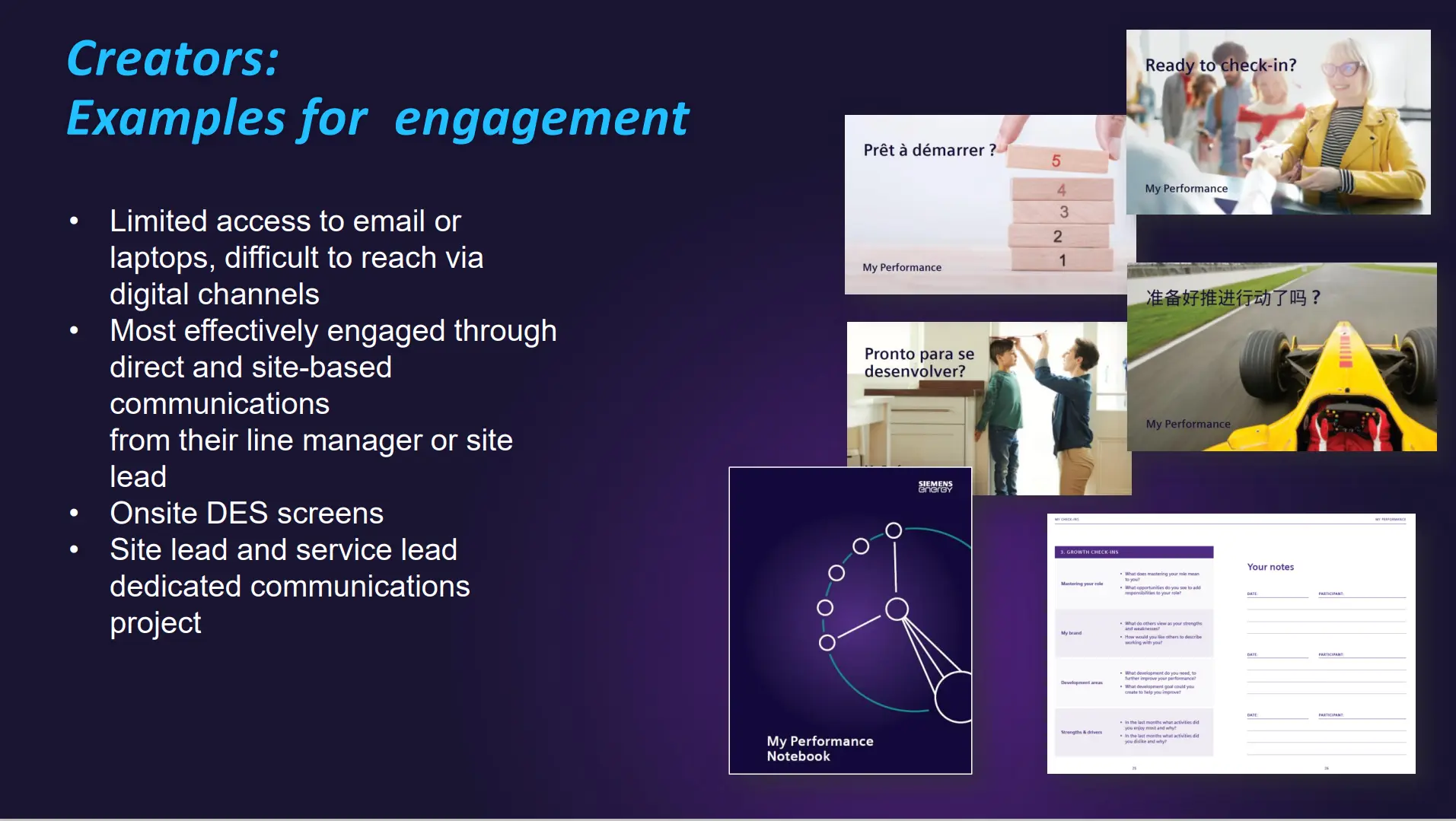
3. Identifying how best to reach the audience: From there, Siemens Energy's comms team honed their tactics to reach the right audience at the right time on the right channel. For example, leaders receive targeted communications via the Leaders' Hub SharePoint that are categorized by priority: need to do, need to know, good to do and good to know.
They also set up a self-serve communications site, iCommunicate, that provides a quick guide employees can use to access content and choose the right channel for internal communications.
4. Auditing personas: The comms team also set up a process to continously refine personas based on feedback through a variety of leader and employee channels, as well as analysis of engagement data.
How are you and your team dealing with information overload? Share your ideas by dropping me an email at [email protected] or joining a discussion on the CLC Forum.